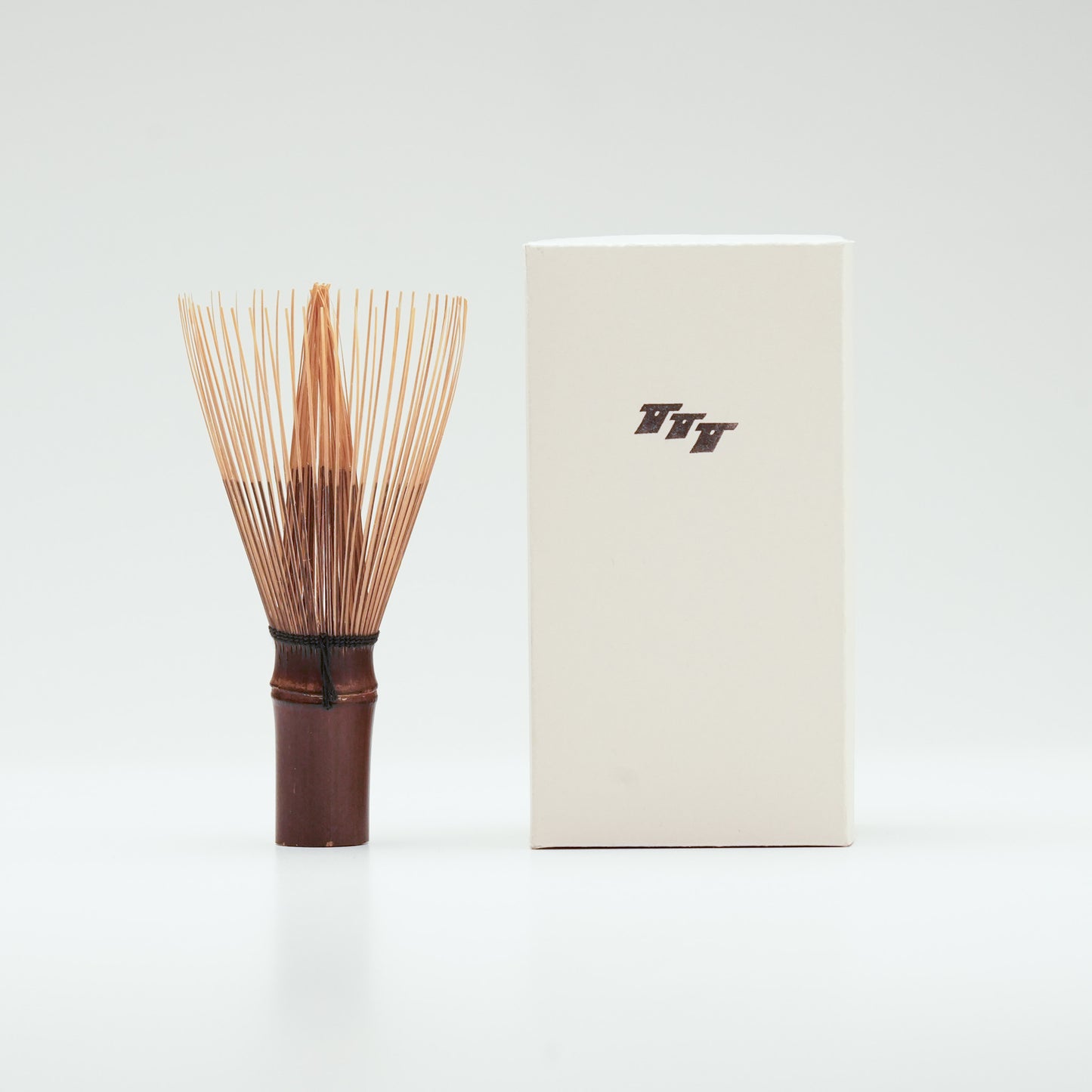
CHASEN
CHASEN
Couldn't load pickup availability
Recommended for: Beginners, all-purpose
Foam level: Moderate to high
STYLE
The Kazuho shape is a classic, versatile form with tightly curled tips. These inward curls increase surface contact and aeration while whisking, making it a beginner friendly chasen for both daily preparation and formal tea practice.
CRAFTSMANSHIP
Handmade by Chikumeidō (竹茗堂), a family workshop in Takayama, the birthplace of the Japanese tea whisk. Each chasen is cut, split, and shaped entirely by hand from a single piece of bamboo.
Watch how Chikumeidō craft their chasen.
Due to its handmade nature, each chasen may show slight variations in color, shape, and grain.
Recommended for: Intermediate, all-purpose
Foam level: Moderate
STYLE
The Shin Kazuho is defined by its gently curved tines, and is designed for precision and control. Shin (真), refers to something in its purest form, and this chasen reflects that through its subtle elegance and ability to produce a fine, balanced foam with a smooth finish.
CRAFTSMANSHIP
Handmade by Chikumeidō (竹茗堂), a family workshop in Takayama, the birthplace of the Japanese tea whisk. Each chasen is cut, split, and shaped entirely by hand from a single piece of bamboo.
Watch how Chikumeidō craft their chasen.
Due to its handmade nature, each chasen may show slight variations in color, shape, and grain.
Recommended for: Advanced, traditional preparation
Foam level: Low to moderate
STYLE
The Kankyūan chasen represents the oldest known form of the tea whisk, defined by its straight, uncurled tines. This straight profile creates minimal aeration, producing an even surface with light foam; focusing on clarity and subtle taste rather than froth. This classic form is said to have been favored by Sen no Rikyū.
CRAFTSMANSHIP
Handmade by Chikumeidō (竹茗堂), a family workshop in Takayama, the birthplace of the Japanese tea whisk. Each chasen is cut, split, and shaped entirely by hand from a single piece of bamboo.
Watch how Chikumeidō craft their chasen.
Due to its handmade nature, each chasen may show slight variations in color, shape, and grain.
Origin: Takayama, Nara, Japan
Workshop: Chikumeidō, led by Kubo Sabun (24th generation)
Shape: Kazuho
Tine count: ~65
Dimensions: L110mm x D55mm
Materials: Japanese white bamboo
Construction: Single-piece, handmade
Tea school: Urasenke
Intended for: Usucha (thin matcha), koicha (thick matcha)
Origin: Takayama, Nara, Japan
Workshop: Chikumeidō, led by Kubo Sabun (24th generation)
Shape: Shin Kazuho
Tine count: ~65
Dimensions: L113mm x D55mm
Materials: Japanese white bamboo
Construction: Single-piece, handmade
Tea school: Urasenke, Omotesenke
Intended for: Usucha (thin matcha), koicha (thick matcha)
Origin: Takayama, Nara, Japan
Shape: Kankyūan
Tine count: ~60
Dimensions: L115mm x D57mm
Materials: Japanese black bamboo
Construction: Single-piece, handmade
Tea school: Mushakōji-senke
Intended for: Usucha (thin matcha)
Before use: soak the bottom half of the tines in warm water for a few minutes, until the bamboo is relaxed. Avoid submerging the handle.
After use: gently whisk the chasen in warm water, and remove any remaining matcha with your fingers. Do not use soap or leave it exposed to moisture for long periods. Allow the chasen to dry completely, preferably on a chasen stand.
Before use: soak the bottom half of the tines in warm water for a few minutes, until the bamboo is relaxed. Avoid submerging the handle.
After use: gently whisk the chasen in warm water, and remove any remaining matcha with your fingers. Do not use soap or leave it exposed to moisture for long periods. Allow the chasen to dry completely, preferably on a chasen stand.
Before use: soak the bottom half of the tines in warm water for a few minutes, until the bamboo is relaxed. Avoid submerging the handle.
After use: gently whisk the chasen in warm water, and remove any remaining matcha with your fingers. Do not use soap or leave it exposed to moisture for long periods. Allow the chasen to dry completely, preferably on a chasen stand.